Posts

Showing posts with the label palm sunday

The king who comes to bring peace.

Mark 11.1-11 Today we remember and we give thanks for that day when the king rode into his city. He is the King, the Messiah That is so clear in Mark’s gospel. This is the first time that I have noticed this, but Mark does not quote Zechariah 9.9. Zechariah 9.9 is the prophecy that the Messiah, God’s King, will enter Jerusalem riding on the colt of a donkey. ‘Rejoice greatly, O daughter Zion! Shout aloud, O daughter Jerusalem! Lo, your king comes to you; Triumphant and victorious is he, Humble and riding on a donkey, On a colt, the foal of a donkey.’ Matthew quotes Zechariah 9.9; John quotes the first part of Zechariah 9.9. But Mark does not. A Gentile, a non-Jew, as they heard this read, would completely miss the reference to the idea that Jesus was fulfilling prophecy, or that Jesus was coming as a humble king. What they would hear is something very different: God's King is coming to God's city. 1.        ...

The triumphal entry: a talk for Palm Sunday

Image
Mark 11.1-11 I’d like to show you an icon of the triumphal entry. This is a Russian icon from the 16 th century. It depicts the event we have just read about in Mark 11. In the centre we have Jesus. It is all about him. His head is at the central point. He has a halo (which has faded), and he is riding a horse (they didn’t know donkeys in Russia which is why they show Jesus riding on a horse). It is, in this depiction, a noble beast – which at one level slightly misses the point. Jesus did not come riding into Jerusalem on a war horse, but on a donkey. It is not that a king would not ride a donkey, but he would only ride a donkey if he was coming in peace. And Jesus’ choice of the donkey was a fulfilment of Zechariah 9.9, ‘Rejoice greatly, O daughter of Zion! Shout aloud, O daughter Jerusalem! Lo, your king comes to you; triumphant and victorious is he, humble and riding on a donkey, on a colt, the foal of a donkey.’ So Jesus is claiming to be King, but claiming to be a ...

Understanding the icon for Palm Sunday

Image
This is one of the more accessible icons. It also has profound depth. It tells the story of the day when Jesus rode into Jerusalem riding on a donkey. It is a significant story and it appears in all four gospels (Matthew 21:1-11; Mark 11:1-11; Luke 19:28-44; John 12:12-19). The particular icon that we see here is Russian and comes from the C16th. It can be found in the Pskov museum. Jesus is shown riding on a horse. Donkeys were unknown in this part of Russia, and so horses are used to depict the donkey. In this icon, the horse is noble – a far cry from the colt of the donkey that we are told Jesus rode on. Other similar icons have the horses submissively bowing their head. However we need to be aware that the icon is not depicting the actual scene: rather it is trying to uncover its meaning. The fact that Jesus rode a colt was a fulfilment of the prophecy of Zechariah 9:9, which speaks of God’s king coming to Jerusalem riding on a colt. It is this which the ico...

A talk for Palm Sunday 2013

Image
Luke 19:28-44 Many of us are driven by the pursuit for applause. We want our moment in the spot light. We want to be a star – in whatever is our chosen field. We want to know that we really matter, and that other people know we really matter. We day dream: I’ve run the grand prix and we’re standing on the podium I’ve scored the winning goal in the FA cup and I’m lifting the trophy and 50000 people roar. You’re on the cat walk – people are gasping at your beauty You’re the leader of the party which has won the election, and at the conference the party adores you. You’ve won the X factor, millions of people have voted for you, the glitter falls and the music swells, and it is your name that is in the headlines You’ve become pope, and 150000 chant your new name The astonishing thing about Jesus is that he could have had all that and more, and yet he never seeks the limelight. When, in Mark 1:36 – because of his healings – he is told ‘everyone is looking for...

Palm Sunday - an all age talk

Image
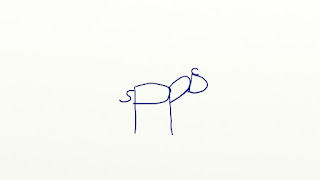
Mark 11:1-11 Draw a donkey (or get people to draw a donkey) using the letters D (disciples), C (colt), P (people), P (praise) and S (spread) As you draw the donkey, tell the story as told by Mark. 'Jesus told two of his D isciples to fetch him a C olt. As they were untying the colt, the P eople asked them what they were doing (obviously the local 'neighbourhood watch'). They told them that 'The Lord has need of it and will return it'. As Jesus rode on the donkey, the people declared his P raises. They S pread their garments and branches on the road.' So what is going on? Let's look at what the people say about Jesus. 1. They are saying that Jesus is coming in the name of the Lord (v9) (draw the letter L) In other words, Jesus is coming as the representative of God. If the Headteacher at school stops you in the corridor as you are going into a lesson and tells you to ask another teacher to come and see him, you are sent in the name of the h...

What happened on Palm Sunday?

Luke 19:28-44 Our passage today is headed ‘The Triumphal Entry’. It is about the events that happened on the first Palm Sunday. Jesus enters Jerusalem riding a colt, glory is given to God 1.       Jesus, God’s King, comes to Jerusalem, God’s city Jerusalem was God’s city: it was the home of the temple, the place where God had said that his name would dwell, the place where God and humans meet together. But he comes openly as King. And Jesus is God’s King. We’ve been told that in Luke from the very beginning – from when the Angel Gabriel appears to Mary and tells her that her child will be the Son of the Most High, and that he will reign over God’s people for ever. Earlier in Luke, Jesus has kept his identity hidden. In Luke 9:21 , we are told that he strictly charged and commanded his followers to tell no one that he was the Christ, that is – the one who was to be God’s anointed ruler But now, on this first Palm Sunday – now th...

Palm Sunday 2008

Matthew 21:1-11 It is often noted that Jesus could have come into Jerusalem as a conquering warrior. It was what people desired: the hero, the Messiah: the one who would evict the Romans, who would solve their problems and give them what they wanted. But Jesus chooses instead to come into Jerusalem riding on a donkey. And in doing so, Jesus declares three things 1. That he is Messiah , God's King who is coming to God's city in order to reign. He fulfils the prophecy of Zechariah 9:9 - which says that the Messiah will come riding on a donkey And he receives the people's praise: if there is anything ambiguous about the riding on a donkey, there is nothing ambiguous about the people's praise. They are acclaiming him descendant of David, the greatest King in Israel's history; David was the prototype for the Messiah who is to come. And so the people declare Jesus to be King and Messiah: "Hosanna to the Son of David" 2. The nature of his kingship...