Posts

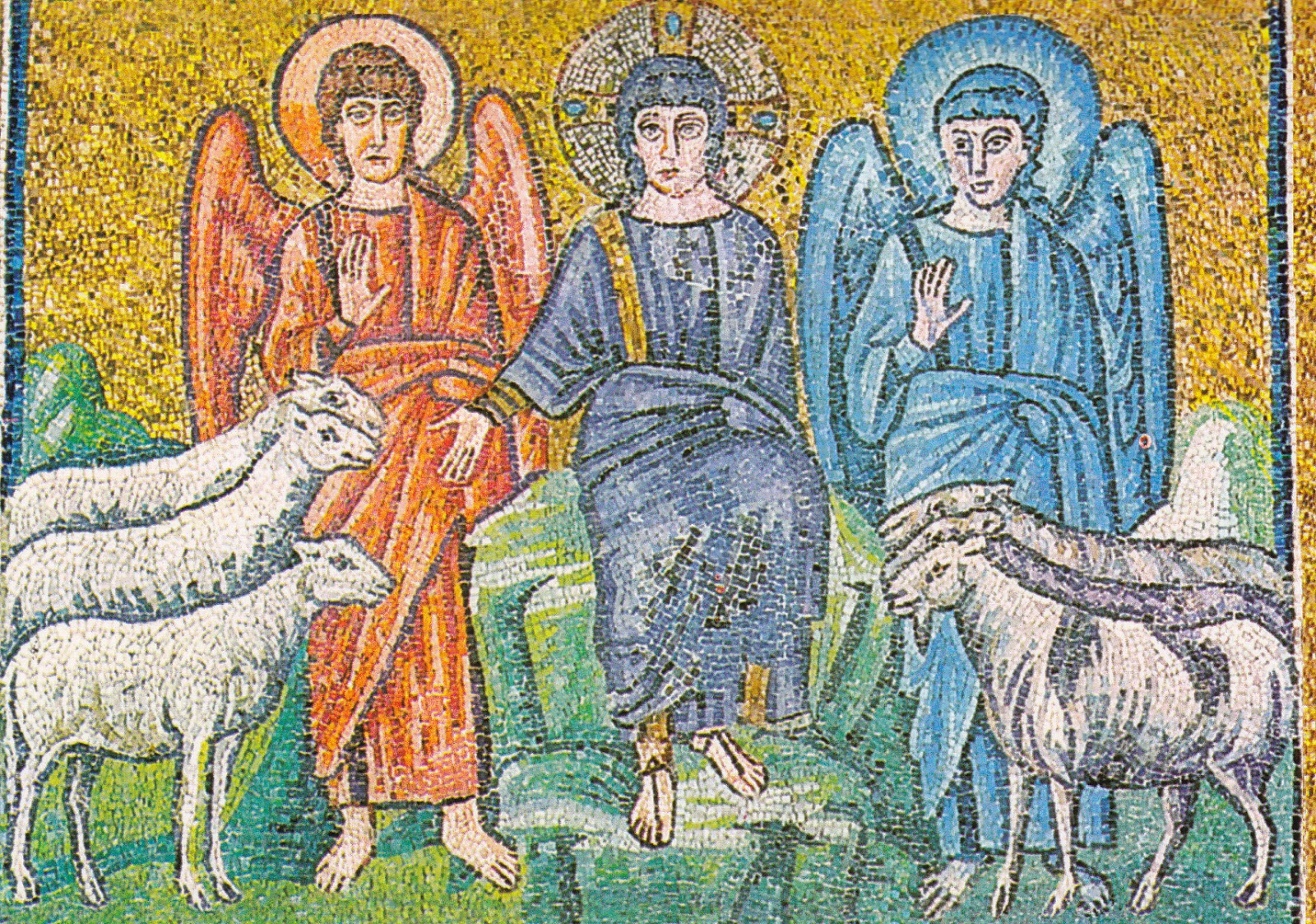
The sheep and the goats
Image
Matthew 25:31-50 listen to ‘The parable of the sheep and the goats’ on audioBoom This is one of those stories that has shaped our national life and consciousness. It could be argued that this story that Jesus tells is THE story that created the values which motivated those who set up our welfare state. Why should there be no person who is hungry, thirsty or naked in our society? Why should no person die of sickness without us doing what we can to bring healing or comfort? Why should we not welcome the stranger? Why should we ensure that there is some compassion in our prisons? It is not universal. In many societies there has been no reform of prisons; strangers are dangerous and you have nothing to do with them; the sick will die and if you want to stay healthy you avoid them; the hungry, thirsty and naked are hungry, thirsty and naked because they deserve to be hungry, thirsty and naked. We live in a society which has been shaped by this book; our values have be...

The Glorious Dead - a talk for remembrance Sunday

Image
You may have noticed that the cenotaph has moved since last year. It now rests beside the Regimental Chapel. It was quite a job. The builders said that it was like working with lego. It came apart in 70 different pieces.  On the cenotaph is an inscription. There are three words that echo words inscribed on the cenotaph in London, 'The Glorious Dead'.  I've done a bit of digging on the internet. The first time that I find the phrase in English literature is in a poem dated 1699 . It speaks of the death of the Earl of Abingdon, but hints at a reference in Homer's Odyssey where Menelaus speaks of the calamitous fate that has befallen his friends as they fought for his cause overseas.  The passage that is referred to (and I use here Alexander Pope's translation of 1725). 'Still in soft intervals of pleading woe regardful of the friendly dues I owe I, to the glorious dead, for ever dear Indulge the tribute of a grateful tear' Today,...

Living for God in an idol obsessed world

1 Thessalonians 1.1-10 listen to ‘living for God in an idolatrous age’ on audioBoom Over the next few weeks we will be spending time with the letter that Paul wrote to the new church in Thessalonica. This letter is almost certainly Paul’s first letter and the earliest Christian document that we have. It was written about 15 years after Jesus’ death and resurrection. That is very close. It is a bit like someone writing today about the impact of something that happened in 2000. It is a letter which does four things.  First, and this is what we look at today, Paul gives thanks for the Thessalonian church. Second (chapters 2 and 3), he reaffirms the authenticity of his ministry and his love for the Thessalonian believers. Third, he urges them on to sanctification – to live a holy live (that is chapter 4.1-12); and finally he reassures them about those who have already died (chapter 4.13-5.11) So in chapter 1, Paul gives thanks to God for the Thessalonian church. ...

Being ambitious for God - a talk for harvest

Image
Matthew 25:14-30 The parable of the talents I'd like to speak about being ambitious  - about being ambitious for God. This is the story of three people. They were each given a share of the masters property. Two worked hard. They used what they had been given in order to make more. One did nothing. He buried the gift. And when the master returns he is condemned. Margaret Thatcher famously used the parable of the talents. She spoke of how it was a story of taking what you have, working hard and making something for yourself from it.  But the parable of the talents is not a theological justification for unbridled capitalism. It is not about the person who made good, who says ‘God I came from a council estate, I had limited education, I never knew my dad, and mum was messed up and I had nothing – but now I have £56 million. I’ve used the nothing that I had but now look at me’. That is great - depending on how you have made your £56m! It is good to take what ...